


HIPAA, SOC 2 & AI Notes: 7 Myths Dental Teams Should Stop Believing
Nov 28, 2025 ·

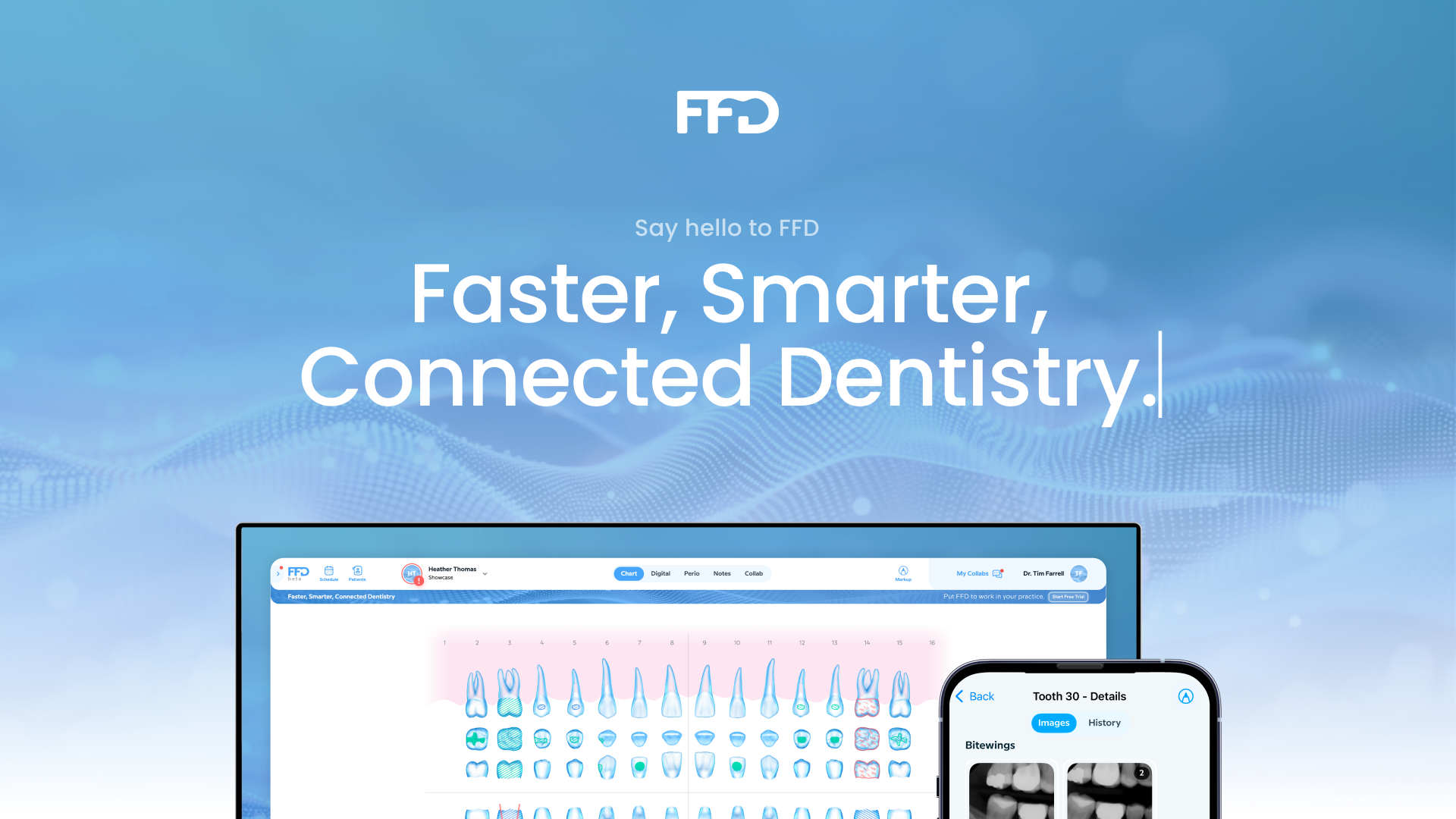
Faster, Smarter,
Connected Dentistry™



FFD inaugurat CuratioUnum, novum modum quo utentes plures FFD machinas uno consilio simplici possunt.
AI is no longer a futuristic buzzword in dentistry. From Overjet to Pearl to Videa, dental AI companies are reshaping how practices diagnose, chart, and communicate. Yet many dentists still hesitate to adopt AI-powered notes because of compliance myths. HIPAA, SOC 2, and “data security” often sound intimidating, but the reality is far simpler. Let’s cut through the noise and tackle seven myths that may be holding your team back.
Reality: HIPAA compliance is the baseline, not a bonus. Trusted vendors encrypt data, restrict access, and keep full audit trails. Harvard Medical School notes AI can even reduce compliance risk by cutting manual errors in charting.
If an AI partner can’t show proof of HIPAA safeguards, that’s the warning sign—not the use of AI itself. Modern platforms like FFD are built to sync securely with your PMS, so protected health information never leaves a compliant environment.
The takeaway: HIPAA isn’t a barrier to AI notes. It’s already baked in when you choose the right solution.
Reality: SOC 2 isn’t a buzzword—it’s an independent audit that verifies whether a company protects data with real safeguards. It covers:
Dental AI providers like Denti.AI and FFD highlight SOC 2 because it signals accountability, not hype. For your practice, it means patient notes live in an environment that’s continuously monitored, not just labeled “secure.”
Think of it as the difference between locking your office door and installing a 24/7 security system. SOC 2 is that ongoing protection, giving you confidence your records stay safe as threats evolve.
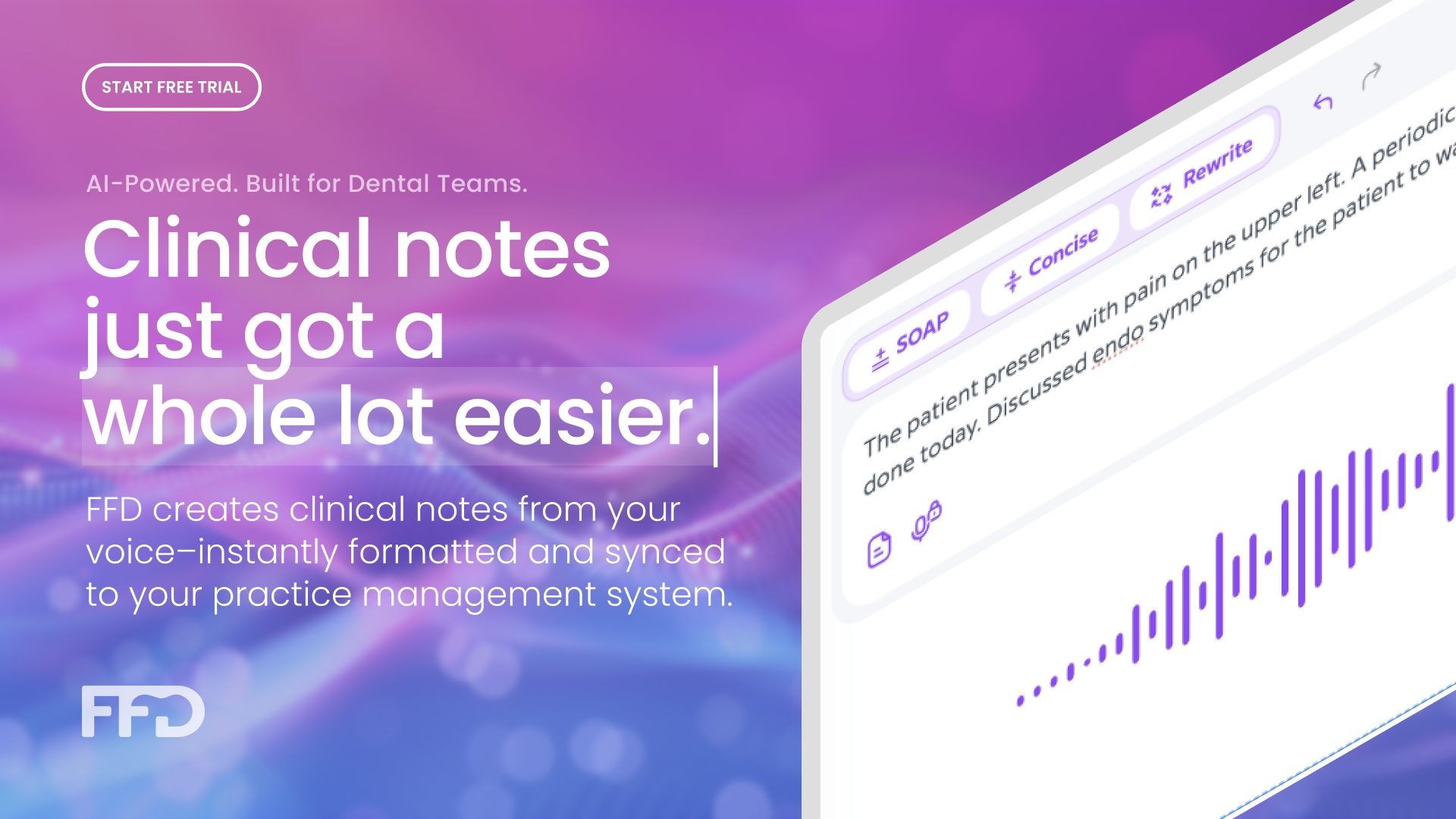
Reality: AI doesn’t diagnose or override your expertise. It captures what you say, organizes it into SOAP format, and files it back into the chart. Think of it as a digital scribe that never misses a detail.
Research in Frontiers in Dental Medicine shows AI boosts accuracy in record-keeping, but the treatment plan is always yours. Tools like FFD are designed to reduce clerical load, not clinical authority. You stay in control of every diagnosis and decision.
The real benefit is consistency. Notes are complete, legible, and instantly accessible across devices. That means fewer errors, faster chart reviews, and more time for patient care—without ever diluting your judgment.
FFD inaugurat CuratioUnum, novum modum quo utentes plures FFD machinas uno consilio simplici tegere possunt.
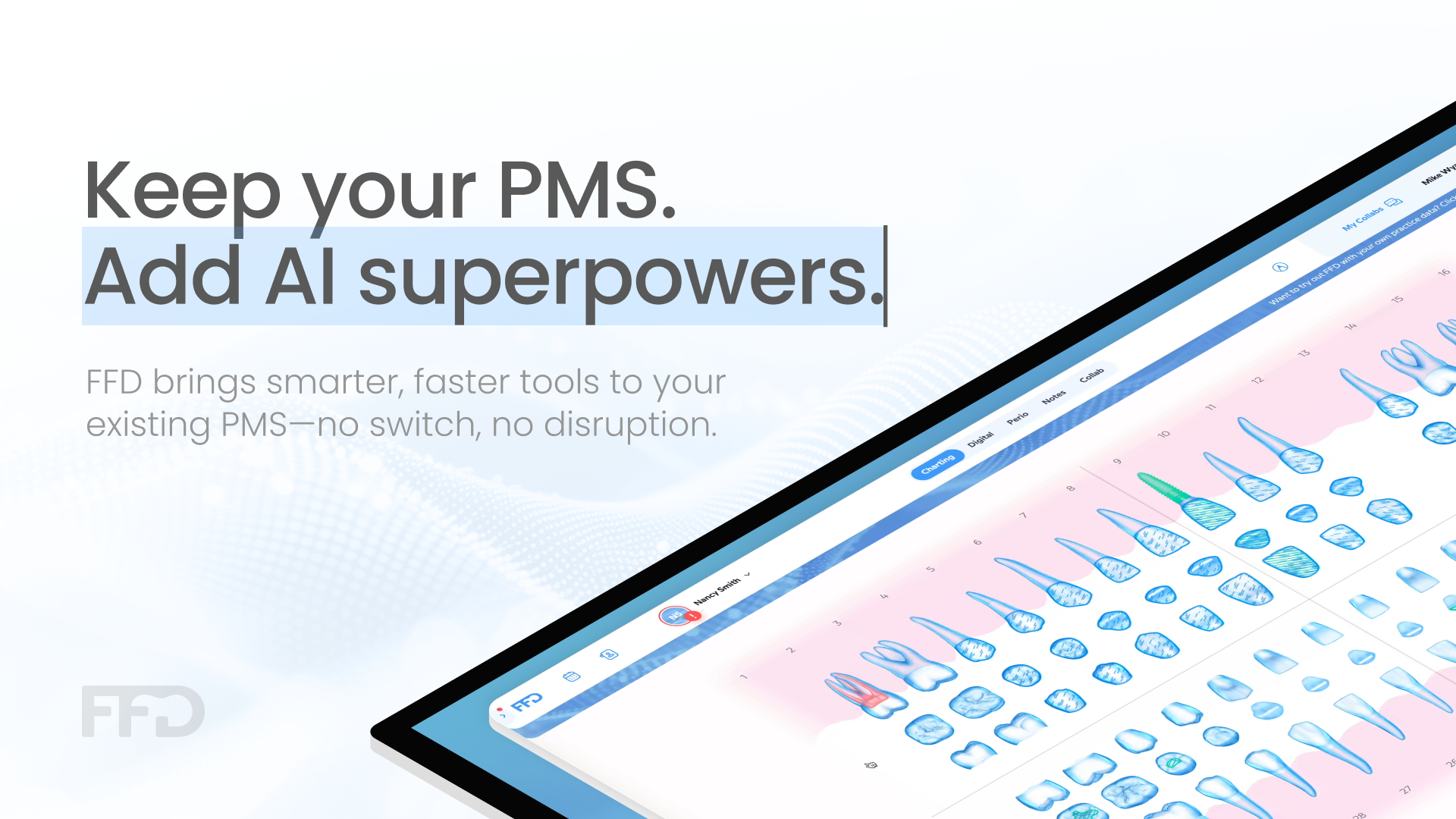
Reality: Many dentists assume adopting AI means migrating their entire practice management system. Not true. Modern solutions like FFD Dental Notes v2 snap onto existing systems like Dentrix with no disruption.
Reality: Many dentists assume adopting AI means migrating their entire practice management system. Not true. Modern solutions like FFD Dental Notes v2 snap onto existing systems like Dentrix with no disruption.
Think of it less like replacing your engine and more like adding cruise control. You keep the system you trust, but it suddenly runs smoother and faster.
Reality: Cost is relative to time saved. Ten minutes freed per patient adds up to hours each week—time you can spend on treatment or new patients. At roughly $299/month for five users, the subscription often pays for itself in the first few days.
Think of it as hiring a digital scribe that never calls in sick. The cost isn’t overhead—it’s reclaimed chair time and smoother workflows.
Reality: Patients already trust AI in medicine, from radiology to cardiology. Dentistry is no different. The ADA notes AI can increase trust by making diagnoses and records more transparent.
Why Patients Respond Positively
Why Patients Respond Positively
When patients see their own data—images, notes, and charts—displayed instantly, it builds confidence in both the technology and your judgment.
With tools like FFD, you can share visuals on any device. Instead of replacing the human connection, AI enhances it by making conversations more visual, accurate, and easy to understand.
Reality: AI in dentistry is here to stay. Forsyth Institute showcases startups building long-term AI platforms, while Oral Health Group reports major investment from established players. This isn’t hype—it’s infrastructure.
AI notes are evolving into the backbone of digital workflows. They connect with imaging, perio charting, and collaboration tools, creating a single source of truth across the practice. That kind of integration doesn’t vanish; it compounds.
Think of it like digital radiography years ago—once adopted, no one went back to film. AI notes follow the same path: faster, smarter, and already shaping the standard of care.
HIPAA, SOC 2, and AI myths often mask the real story: modern dental AI is secure, compliant, and designed to lighten your workload. Instead of worrying about audits or migrations, you can focus on patients while notes handle themselves.
Picture your team finishing the day without hours of catch-up charting. That’s not hype—it’s the daily reality for practices already using AI notes.
If you’d like to see it firsthand, join the beta or try FFD AI Notes for yourself. It’s a low-risk way to discover faster, smarter, connected dentistry.
Nov 28, 2025 ·
Nov 28, 2025 ·
Nov 25, 2025 ·
